

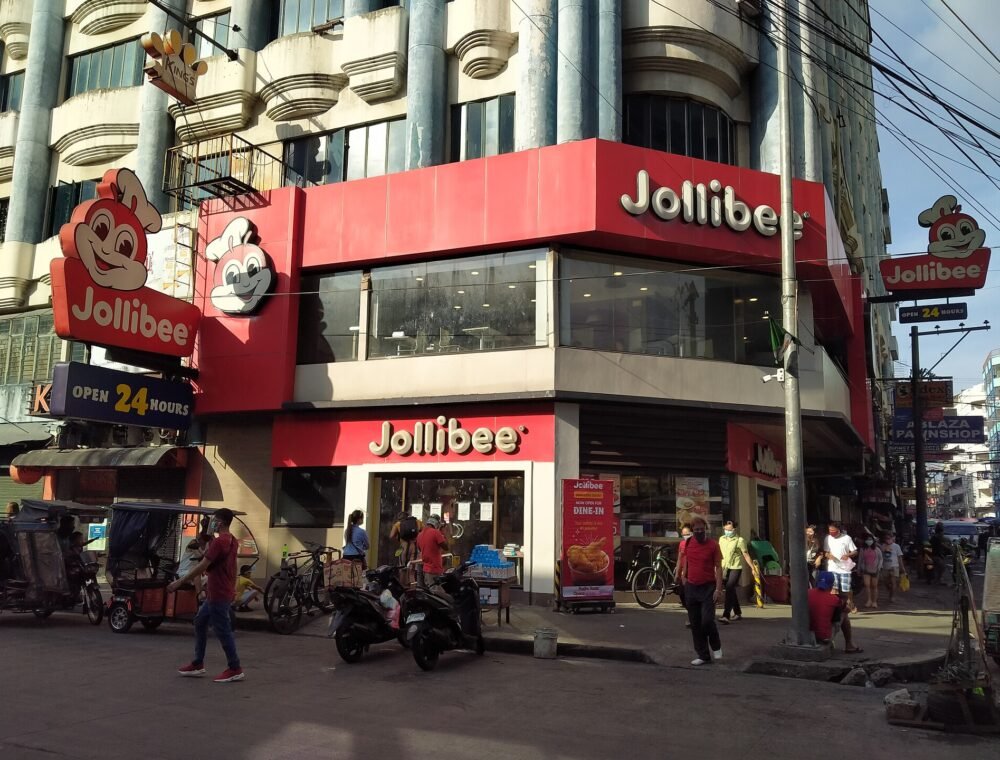
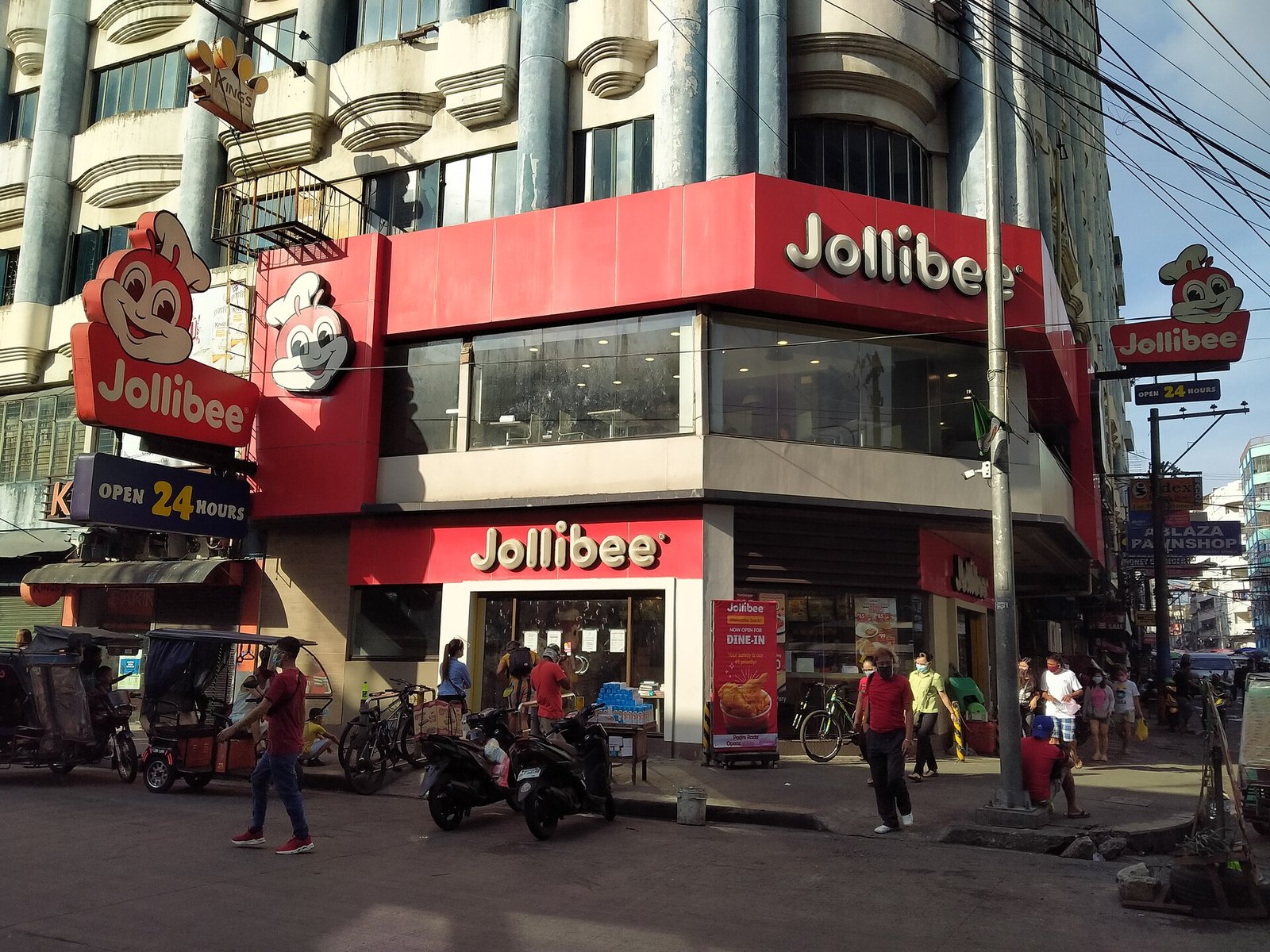
Every Filipino has a Jollibee order they can recite from memory. Two-piece Chickenjoy, extra gravy, Peach Mango Pie. That instinct comes from home, and the Jollibee Philippines menu is where it all starts. With well over a thousand stores across the archipelago, Jollibee is not just a fast-food chain in the Philippines. It is the default celebration venue, the after-school hangout, the place where birthdays happen under a smiling red bee.
For U.S. readers, the Jollibee Philippines menu is also a preview and a puzzle. Some items will look familiar from American stores. Others never leave the islands. Prices shock Americans in the best way. This guide walks through the full picture: the icons, the exclusives, the breakfast plates, and how the home menu differs from what you get in California or New York.
Quick Answer: The Jollibee Philippines menu covers Chickenjoy, Jolly Spaghetti, Yumburgers, Burger Steak, Palabok, breakfast silog plates, and desserts like Peach Mango Pie and halo-halo, across 1,000+ stores. Prices are far lower than in the U.S., with many meals costing the equivalent of $2 to $5. Some items, such as tuna pie and certain breakfast plates, are Philippines exclusives. Prices vary by location and change over time.
Chickenjoy: The Center of the Jollibee Philippines Menu
Everything orbits Chickenjoy. In the Philippines, you order it your way: solo, with rice, with spaghetti, with palabok, in one-piece or two-piece plates, or by the bucket for family-style eating. There is even a Chickenjoy with a side of fries instead of rice for diners who lean Western. The chicken itself follows the same promise everywhere on the Jollibee Philippines menu: crisp seasoned skin, juicy meat, and a peppery gravy that people pour over the rice without hesitation.
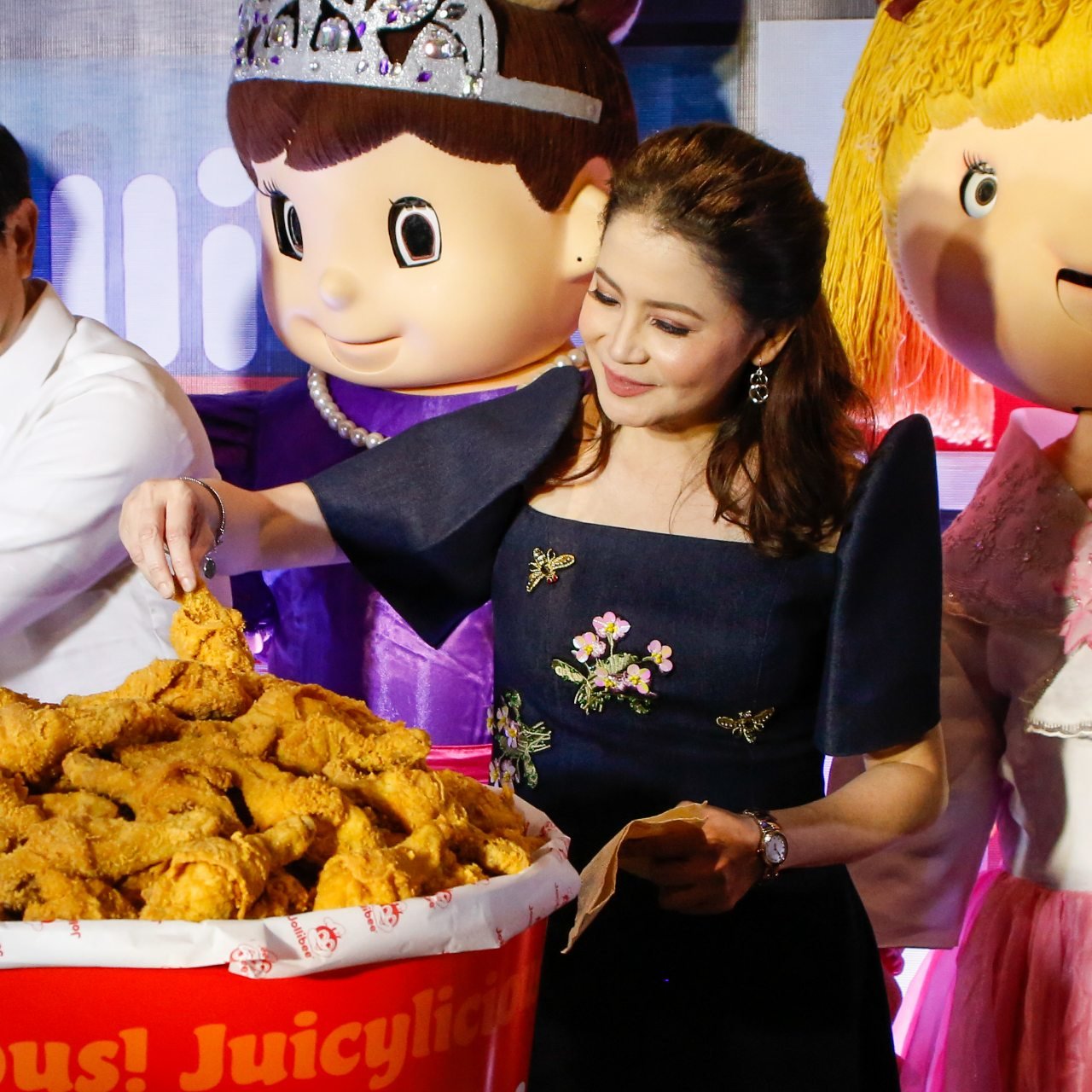
Spicy Chickenjoy carries a loyal following too, dusted with chili seasoning that builds rather than attacks. And yes, Filipinos really do eat fried chicken with rice for breakfast, lunch, dinner, and merienda. The Jollibee Philippines menu never questions this. It simply serves.
Spaghetti, Palabok, and the Noodle Side of the Menu
Jolly Spaghetti might be the most argued-about item on the Jollibee Philippines menu, and the argument is always the same. Sweet sauce, ground meat, ham, and sliced hotdogs over soft noodles. Foreigners hesitate. Filipinos do not. It tastes like every childhood birthday party rolled into one plate, and in the Philippines it is often served with a piece of Chickenjoy on the same tray.
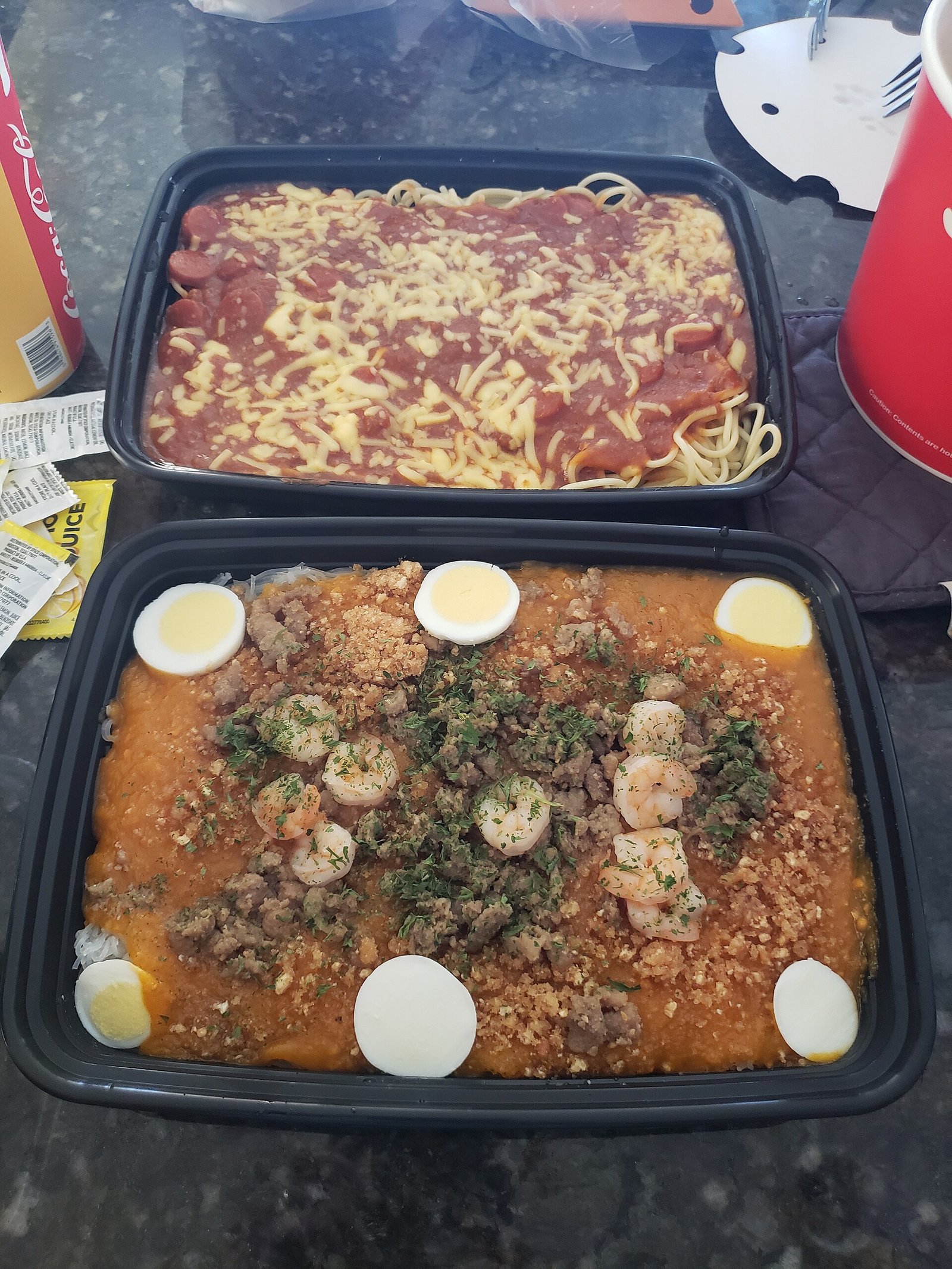
Palabok Fiesta offers the savory counterpoint: rice noodles under a golden shrimp and pork sauce, topped with egg, garlic bits, chicharron, and smoked fish flakes. Between the two noodle dishes, the Jollibee Philippines menu quietly covers the full sweet-to-savory range of Filipino comfort cooking. Compare that to the streamlined U.S. lineup in our Jollibee menu USA guide and you will see how much deeper the home bench runs.
Burgers and Burger Steak
The Yumburger is the humble hero: a beef patty with Jollibee’s signature dressing in a soft bun, priced for students. Step up and the Jollibee Philippines menu adds cheese, then the Champ line with thicker patties, and loaded variants with egg or bacon when promotions roll around. Burger Steak plates take those same patties in a different direction, laid over rice and drowned, happily, in mushroom gravy. One patty for a light meal. Two when the day demands it.
| Category | Signature Items | Typical PH Price Feel |
|---|---|---|
| Chickenjoy Meals | 1-pc or 2-pc with rice, buckets | About $2 – $5 per meal |
| Noodles | Jolly Spaghetti, Palabok Fiesta | About $1.50 – $3.50 |
| Burgers | Yumburger, Cheesy Yumburger, Champ | About $1 – $4 |
| Burger Steak | 1-pc or 2-pc with rice and gravy | About $2 – $3.50 |
| Breakfast | Silog plates, pancakes | About $2 – $4 |
| Desserts | Peach Mango Pie, halo-halo, sundaes | About $1 – $2.50 |
Those dollar figures are rough conversions meant to give American readers a feel for value, not exact prices. Peso prices change, promos rotate, and prices vary by location, even within Metro Manila.
Philippines Exclusives Worth Knowing
Travelers, take notes. The Jollibee Philippines menu carries items that rarely or never reach the U.S. The Tuna Pie, a crisp fried pie with a creamy tuna filling, has a devoted fan base and a seasonal rhythm. Breakfast is a whole department at home, not a rumor: the silog plates described in our Jollibee breakfast menu guide are a daily reality in Manila. Halo-halo, the shaved-ice dessert layered with beans, jellies, leche flan, and ube, shows up in Philippine stores in a fuller form than the cup versions abroad.
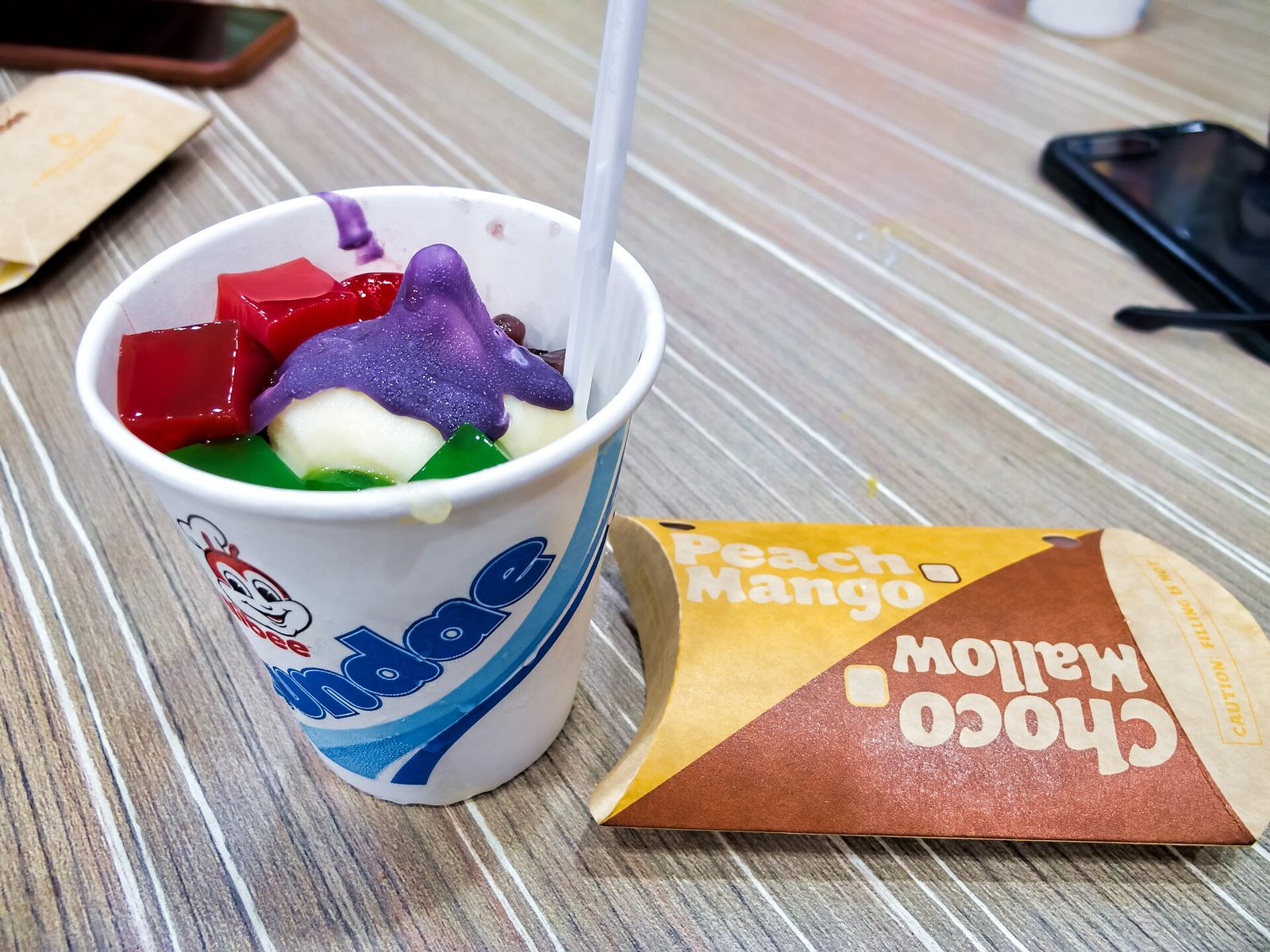
Limited-time collaborations also land in the Philippines first. When a special burger or pie trends in Manila, U.S. fans watch from afar and start petitions. Sometimes the petitions work.
How the Home Menu Differs From the U.S. Menu
Three differences stand out. First, depth: the Jollibee Philippines menu simply has more items, more combos, and more price tiers, because it serves everyone from students counting coins to families ordering buckets. Second, breakfast: full silog service at home, limited mornings in the States. Third, price: an order that costs $13 in Los Angeles may cost the equivalent of $4 in Quezon City, which is why visiting Filipinos eat there daily without thinking twice.
What stays the same matters more, though. Chickenjoy tastes like Chickenjoy. The spaghetti is sweet in both hemispheres. And the crew still greets you like you are the best part of their shift. For today’s official listings and store information, the official Jollibee menu page for U.S. stores covers the American side, while Philippine store details live on Jollibee’s home-country channels.
The Party Culture Around the Home Menu
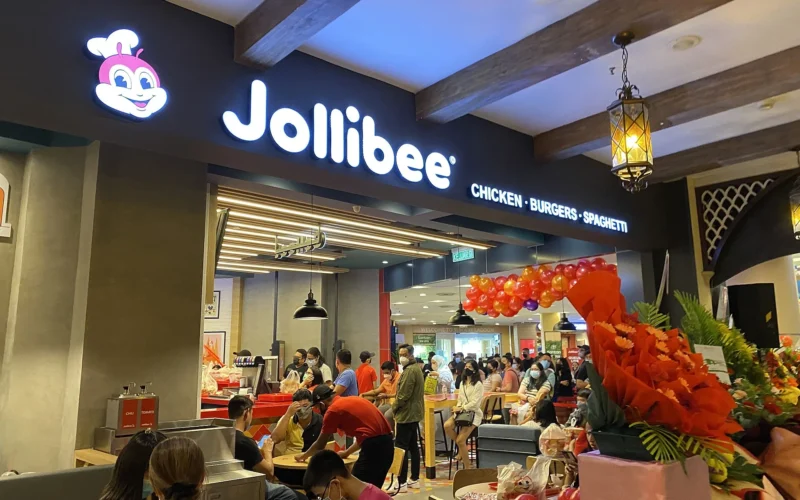
To understand this menu, you have to understand the Filipino children’s party. For decades, the standard celebration has meant long tables, balloons, a mascot appearance, and trays of spaghetti and chicken for a crowd of cousins. Jollibee did not just sell food to that culture; it became the venue for it. Stores keep party rooms, parents book them months out, and a generation of Filipinos has blown out birthday candles under the bee’s grin.
That party DNA shows up in the menu design itself. Family pans of spaghetti. Buckets sized for a table, not a person. Prices tiered so a student with coins and a family with a tray both find their lane. Even the sweetness of the spaghetti traces back to children’s palates at those parties. The menu is engineered for sharing, and it explains why, abroad, the dining rooms fill with big tables ordering for the group instead of solo meals at the counter.
There is a business lesson in there that global rivals studied hard: win the family celebrations and you win the country’s loyalty for life. In the Philippines, that loyalty is not theoretical. Grandparents who hosted parties there now take grandchildren to stores in California, and the order has not changed in forty years.
One More Home-Country Ritual: The Spaghetti Pan
Ask a Filipino family abroad what they would teleport from home if they could, and the family-size spaghetti pan makes the list every time. It is the centerpiece of home gatherings in the Philippines, ordered for birthdays, baptisms, and Sundays that simply felt like occasions. Our Jollibee spaghetti deep-dive covers the dish’s history and the great sweet-sauce debate in full. The home stores sell it by the tray because the demand never really pauses; there is always a celebration somewhere in the neighborhood, and it always needs a pan.
Frequently Asked Questions
How many stores does Jollibee have in the Philippines?
Jollibee operates well over a thousand stores in the Philippines, from Metro Manila malls to provincial highways. It is the country’s largest fast-food chain, and new locations still open every year.
Is the Philippines menu cheaper than the U.S. menu?
Yes, dramatically. Most meals cost the equivalent of a few U.S. dollars. Lower operating costs and local pricing make the home menu one of the best fast-food values in Asia.
What items are exclusive to the Philippines?
Regular exclusives include the fuller breakfast silog range and halo-halo in its classic form, while items like the Tuna Pie rotate seasonally at home and appear abroad only rarely, if at all.
Does Jollibee in the Philippines serve the same Chickenjoy?
The recipe and preparation follow the same standard, which is why the taste is so consistent. Many fans swear the home version hits different, but that may just be the Manila air and a table full of family.
Can I read the menu in English?
Yes. Menus in the Philippines are printed in English, and staff across the country serve international visitors every day. Ordering at home is easy even if you do not speak Filipino.
Why the Home Menu Still Sets the Standard
Every Jollibee abroad is a postcard from this menu. The Jollibee Philippines menu is where new items are born, where breakfast is a birthright, and where a bee mascot outsells global giants on their own turf. Read it once and you will understand the whole brand: generous portions, joyful flavors, and prices that respect the people who made it famous.
The home-country version, in shorthand, is Jollibee Menu PH, with the Filipino items front and center.
5 comments
Comments are closed.